
Private AI data residency, access and retention
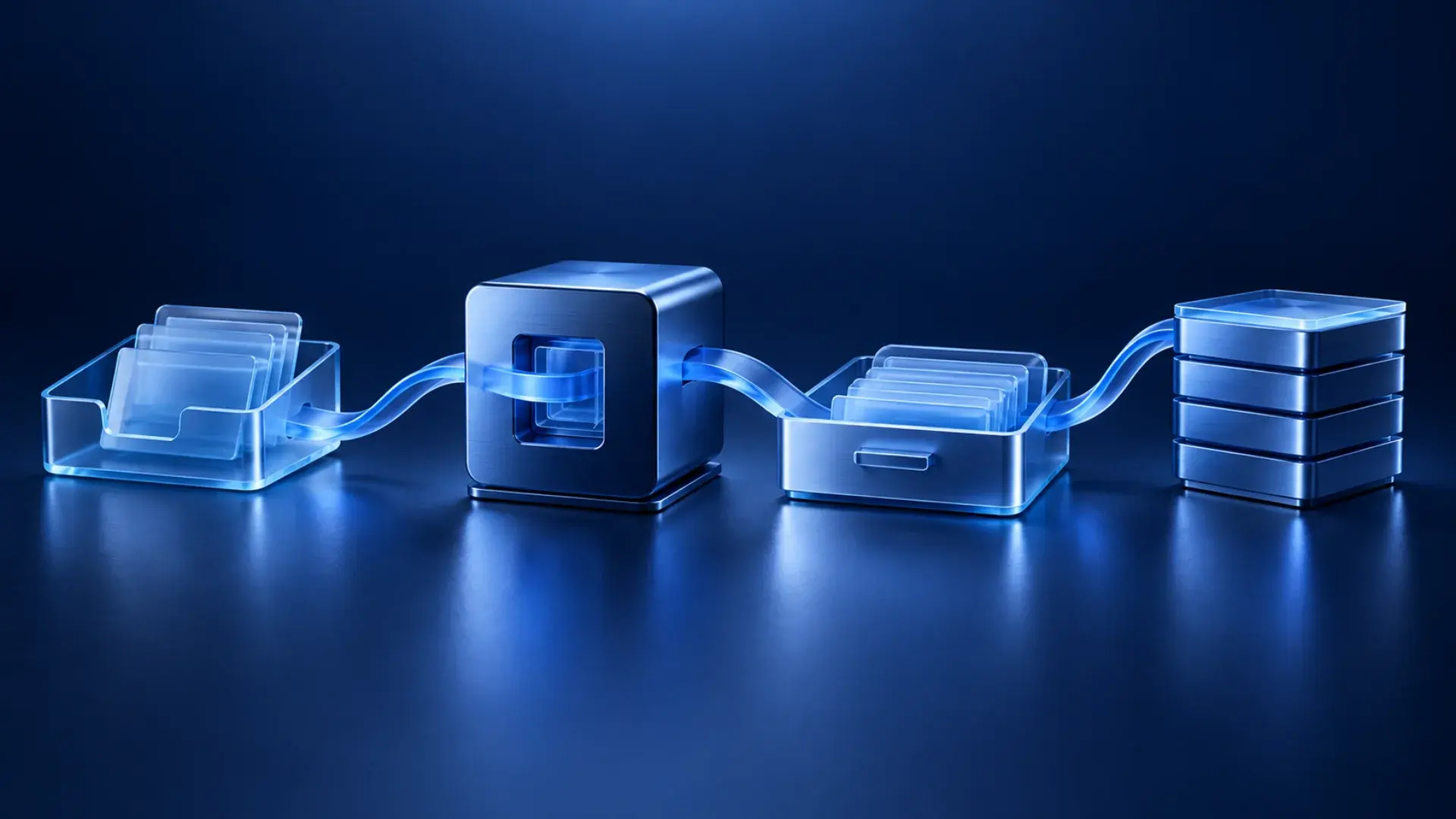
Follow a request through the interface, model, logs, backups and support. Location alone does not describe the data boundary.
Separate location, access and retention
Residency describes where information is stored or processed. Access describes who can see or use it. Retention describes how long it remains available. A proposal may satisfy a location condition while retaining remote support access. It may remove prompts from the serving engine while the application stores conversation history. Evaluate each property separately rather than inferring one from another.
Start with your organisation's requirement and express it precisely: which data categories may reach which components, which roles may administer them and when copies must be removed. This guide describes technical data-flow review. Legal obligations must be established for the specific use case rather than inferred from the phrase private AI.
Build a component-level data inventory
| Component | Potential information | What to document |
|---|---|---|
| Interface | Questions, attachments and history | Local storage, sessions and deletion |
| Gateway | Identity, request and metadata | Logs, filters and limits |
| Retrieval | Query, documents and fragments | Permissions, indexes and updates |
| Serving engine | Context and output | Processing, caches and logging |
| Observability | Metrics, errors and traces | Excluded content and authorised readers |
| Backups | Saved history or configuration | Location, access and expiry |
| Support | Diagnostics and samples | Approval, channel and removal |
Not every component exists in every project. Remove irrelevant rows and add actual dependencies. Record supplier, owner, purpose, destination, retention and evidence for each row. An unknown field represents an open question, not proof that no information is present.
Trace a representative request end to end
Use recognisable synthetic input and observe its authorised journey. Check history, errors, traces, analytics and temporary files. Do not search only for the original text: a summary, extracted field or identifier may still reveal information about the case. Also record metadata that links activity to a person or business record.
For retrieval-enabled applications, include fragments, indexes and embeddings. Do not assume a vector representation is anonymisation. Check whether permissions carry through to retrieval and what happens when a document is withdrawn. The security guide explains why authorisation must be applied before context is assembled, rather than delegated to a model instruction.
Choose logs that support operation without unnecessary content
Operators need visibility, but not always full content. Start with duration, size, status, version and consumption metrics. If prompt samples are needed for investigation, specify selection, access, retention and approval. Avoid enabling full-content debugging in production without a removal procedure and a clear owner for disabling it.
The NVIDIA NIM observability documentation illustrates latency, queue and token measurements useful for engine diagnosis. Your application may record additional information, so review both levels. A supplier statement about its own logs does not automatically describe customer logs or integration telemetry.
Include support and recovery paths
Incidents expose data paths that do not appear in a demonstration. An operator downloads a trace, sends a sample to support or restores a backup in another environment. Document those paths and permissions before they are needed. Where a synthetic reproduction is sufficient, do not attach the production record to the support ticket.
Recovery may alter location or access. Ask where the service is restored and which dependencies are used when the primary environment fails. Fallback to another API needs approval for the relevant data category. The deployment comparison includes continuity in the architecture decision rather than treating privacy as a normal-operation-only property.
Test withdrawal and expiry with a sample
Consider an illustrative example: a document is deleted from the interface, but fragments remain in an index and a backup retains conversation history. Removing the original does not demonstrate removal of every derived artefact. List associated artefacts and document immediate deletion, scheduled expiry and what can return through restoration.
Verify the procedure using a test sample. Check user revocation and administrative access at the end of a pilot as well. Evidence can combine configuration, execution records and a subsequent access check. Do not promise immediate removal from backups if the system uses a different expiry schedule. Describe the actual behaviour and decide whether it meets the requirement.
Turn the map into purchasing conditions
The result should identify approved flows, exceptions and accountable risk owners. During vendor assessment, request answers by component and scenario, including support and exit. OWASP identifies sensitive information disclosure as a system risk. Use the inventory to locate possible exposure and the control intended to limit it.
Private inference services need these conditions to define architecture and tests. The business guide places this decision alongside quality and operation. A short privacy statement becomes useful when an underlying map and evidence explain exactly what it covers.
Frequently asked questions
Does no training mean no retention?
No. Training use and retention are separate decisions. Review history, logs, caches, backups and support as well as the serving engine.
Does hosting in one country prevent access from another?
Not necessarily. Location and administrative access must be documented separately, including support, monitoring and recovery.
Should all logs be removed?
Not automatically. Define the operational evidence needed and minimise recorded content. Align access and retention with the agreed requirements.

Written by
Daute DelgadoCEO & Co-founder, Primedefence
Daute Delgado is CEO and co-founder of Primedefence. He spent more than a decade defending airlines, managed SOCs and international organizations, first as an operator and later leading security teams.
View full profileIs private inference right for your business?
Define your use case, data requirements and pilot acceptance criteria.
Related articles

Private inference · Playbook
Private LLM security: controls and acceptance tests

Private inference · Comparison
On-premises LLM vs private cloud: a deployment decision

Private inference · Playbook
Private AI vendor assessment: an enterprise checklist

Private inference · Guide